
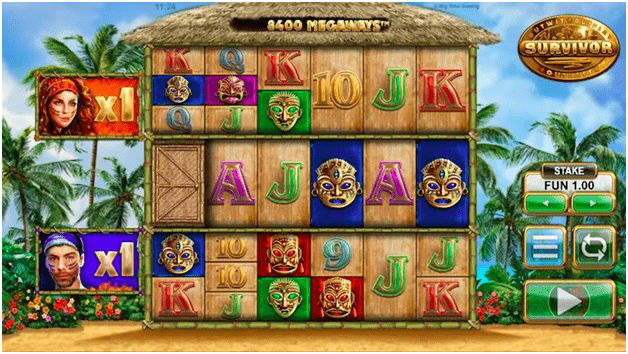
Comprehending the regulations of online gaming in Canada is essential, notably for a top slot like Gonzo’s Quest Megaways. Legal and secure play relies on operators, regulators, and players all understanding their duties. This article breaks down the age verification processes and provincial laws that regulate access to this famous game. Canada’s system isn’t centralized. Rules differ from one province to the next, with each government determining its own legal gambling age and authorizing operators. We’ll review these regional variations, clarify how age and identity confirmations work, and stress why playing on licensed sites is important. The goal is to give you the details you require to play Gonzo’s Quest Megaways responsibly, so your fun stays within the rigorous legal lines drawn across the country.
Grasping Canada’s Decentralized Gambling Legislation
You should understand one thing first: Canada has no single federal law for online casino games like Gonzo’s Quest Megaways. The Criminal Code gives that power to the provinces and territories. The result is a mix of different regulations. Each province determines its own legal gambling age, licenses its own operators, and selects which games its residents can play. Where you live decides where you can legally play. British Columbia and Ontario run open markets with many private operators alongside their provincial lottery corporations. Other provinces maintain a tighter grip, with the government-run crown corporation as the only legal online option. This split system affects everything about how and where you can play. It also modifies how rules are enforced, since each provincial regulator has its own compliance team. Understanding your own region’s rules is the necessary starting point before you place a real money bet on any slot, no matter how fun it looks.
The Role of Provincial Regulatory Bodies
The final word on gambling legality in each province rests with its regulatory body. Organizations like the Alcohol and Gaming Commission of Ontario (AGCO), the British Columbia Lottery Corporation (BCLC), and Loto-Québec hold a distinct job. They protect players, make sure games are fair, and strive to stop crime. For Gonzo’s Quest Megaways to be offered legally, the game provider must have it approved and available on a site licensed by the province. These regulators perform tough audits on the games‘ random number generators (RNGs) to prove they are fair. They also compel licensed operators to use strict responsible gambling tools and follow clear advertising rules. That regulator’s approval is your best sign of a safe, legal place to play. Using a site your provincial regulator hasn’t licensed ibisworld.com breaks the law. It also eliminates your consumer protections, leaving you open to unfair practices and with nowhere to turn if you have a problem.
Primary Duties of a Provincial Regulator
These authorities manage a broad spectrum of day-to-day jobs focused on the player. Their chief task is licensing operators. They scrutinize each one carefully, assessing its economic stability, system security, and corporate ethics. They monitor compliance constantly, demanding operators to disclose unusual transactions or any overall problems. A core function is maintaining a self-exclusion list. This enables a player to ban themselves from every licensed site with a one request. The regulators also establish the rules for required play limits, time-out features, and how promotions must be phrased. When you activate the reels on Gonzo’s Quest Megaways at a licensed site, you know the game’s mechanics and payouts have passed inspection by these entities. Their continuous supervision guarantees the Megaways engine, with its dynamic 117,649 ways to win, runs on a approved RNG. Every result is unpredictable and equitable, just as the law requires.
Minimum Age Rules: A Provincial Breakdown
The age requirement for internet betting in Canada is not simply 19 https://megawaydemo.com/gonzos-quest-megaways/. That age is the norm in many provinces, but significant variations exist. You must check the rule for your specific location. In Alberta, Manitoba, and Quebec, you can play casino games and online slots at 18. But in British Columbia, Ontario, Nova Scotia, and many other regions, you need to be 19. This variation comes from each province’s right to set its own age of majority and establish its own gambling laws. The consequences for making a mistake are severe. Operators must verify your age and location before they allow you to gamble for real money. If you lie about your age or where you are, you may forfeit any winnings and have your account shut down. Playing while underage is also a legal violation. So before you join Gonzo’s quest for golden idols, be fully confident you’ve hit the legal age for your home province.
- Provinces/Territories at 18: Alberta, Manitoba, Quebec, and the Yukon.
- Age 19 Provinces/Territories: British Columbia, New Brunswick, Newfoundland and Labrador, Northwest Territories, Nova Scotia, Ontario, Prince Edward Island, Saskatchewan.
- Key Point: Age rules may differ between lottery tickets, casino games, and physical casinos inside the same province. Always double-check the rule for online casino play exactly.
The Process of Age Verification: How Operators Establish Eligibility
Today’s authorized online casinos use detailed, multi-step age verification. It goes well past just checking a box. When you register, you first declare your age and location. But that self-reported information gets checked right away. Operators combine digital footprint analysis, database cross-checks, and document requests. A soft check might initiate by looking at your device’s IP address to ensure you’re in the approved province. They often use third-party services to verify your details against public records. For the majority of users, this automated step takes place without a hitch. If something doesn’t align, or if you reach certain deposit or withdrawal limits, a „hard“ verification kicks in. This mandatory step demands you to submit clear photos of government ID, like a driver’s license or passport. You might also need a second document, like a utility bill, to confirm your address. This thorough system is a legal must. It serves as the main line of defense against underage players.
The technology for these checks keeps improving. Many licensed sites now use electronic identity verification (eIDV) systems. These can validate digital copies of your documents in real time, https://pitchbook.com/profiles/company/530797-33 using advanced methods to spot fakes. The check isn’t a single event, either. The site tracks accounts continuously. If your activity suggests you changed provinces or activates a responsible gambling alert, you might have to verify your details again. For a game like Gonzo’s Quest Megaways, where cascading reels and growing multipliers can lead to lengthy, engaging sessions, these safeguards are part of a broader responsible gambling plan. Operators have a legal duty to ensure everyone on that immersive adventure is old enough to be there. This looks after the player and maintains the licensed market honest.
Results of Failing Age or Location Checks
Trying to get around age or location checks leads to serious trouble. For the player, the first result is a frozen account. Any pending withdrawals halt, and winnings you accumulated while playing illegally are usually confiscated. Your initial deposit is often refunded, but the operator might deduct an admin fee. They are not obligated to pay out bonuses or winnings. In serious cases, especially if the site suspects deliberate fraud, they can notify you to the provincial regulator and the police. For underage players, this could lead to legal charges. Getting flagged for verification fraud can also lead to a blacklist from all licensed operators in that province, as many regulators exchange security data. It also circumvents the personal responsible gambling controls—like deposit limits and self-exclusion—that are designed to keep you safe.
For the operator, failing to properly verify players incurs heavy penalties from regulators. Provincial bodies can levy large fines, withdraw or cancel licenses, and require public corrective actions. This is why licensed sites spend so much on compliance. The financial and reputational damage is too high a risk. If you play Gonzo’s Quest Megaways on an unlicensed „grey market“ site that bypasses these checks, you aren’t tricking anyone. You’re positioning yourself in an environment where the game’s fairness isn’t verified, your money isn’t protected, and your personal data could be at risk. The strict verification in the legal market might feel like a hassle sometimes. But it’s the foundation that provides a fair game, secure money handling, and a real way to resolve problems when they occur.
Enjoying Gonzo’s Quest Megaways across Regulated vs. Illegal Sites
Choosing between a licensed provincial operator and an unlicensed international site is a choice between a supervised, safe experience and an unsupervised, risky one. A licensed site offering Gonzo’s Quest Megaways in Ontario, for instance, has undergone checks by the AGCO. The game’s RNG is confirmed as fair. Your deposits sit in separate accounts, and the site must release your winnings. You can utilize provincially required responsible gambling tools, and you have a direct path to complain to the regulator if something goes wrong. An unlicensed site functions outside Canadian provincial law. No one independently audits the game’s RNG, so you can’t trust the advertised return-to-player (RTP) percentage or how the Avalanche feature functions. Your money gets mixed with the site’s operating funds. If the site collapses, you could forfeit your deposit.
- Game Integrity: Licensed sites offer games audited by the province. Unlicensed sites offer no assurance the slot performs as promised.
- Financial Security: Licensed operators must secure player funds. Unlicensed sites have no such rule, leaving your deposit at risk.
- Player Protection: Licensed platforms include mandatory cooling-off periods, self-exclusion, and reality checks. Unlicensed sites often skip these safeguards.
- Legal Recourse: With a licensed operator, you can raise issues to the provincial regulator. With an unlicensed site, you have no genuine legal standing at home.
The exhilarating hunt for wins in Gonzo’s Quest Megaways should not include betting on the site’s honesty. The licensed market exists to provide a safe space for entertainment. It lets you to focus on the game itself, not on anxieties about basic safety and fairness.
Safe Betting Tools and Resources in Canada
Age verification is just the start. Licensed Canadian operators must also provide a full set of responsible gambling tools. These are regulatory mandates, built right into the platform. Before you start your first Chain reaction in Gonzo’s Quest Megaways, you can establish deposit caps for a day, week, or month. You can implement loss limits and wagering limits. You can schedule reality-check reminders that appear during your session. For a longer break, you can opt for a 24-hour, 7-day, or 30-day pause without closing your account. The most key instrument is province-wide self-exclusion. You can request exclusion from every licensed site for a set period, a process overseen by the authority. These tools put you in control of your play. They assist in maintaining the game a positive form of entertainment.
Canada also has solid countrywide help services. Groups like the Canadian Centre on Substance Use and Addiction (CCSA) and provincial bodies like the Responsible Gambling Council in Ontario or PlayNow’s GameSense in BC deliver discreet support and help. Many licensed sites refer directly to these aids and train staff to spot signs of problem play. When you play a feature-packed slot like Gonzo’s Quest Megaways, where consecutive wins can push multipliers to 5x in the base game and 15x in the Free Falls bonus, these tools assist you in maintaining your balance. They allow you to savor the game’s built-in volatility and potential within a framework of mindful entertainment. That’s the whole point of a legally regulated online gaming market.